Discipline
Peptide biosynthesis
 Lausanne BioSynth
A plain-language guide to how a peptide is biosynthesised, characterised and preserved — and Lausanne BioSynth, a Swiss-precision biosynthesis capability under Panacea Bio Chem.
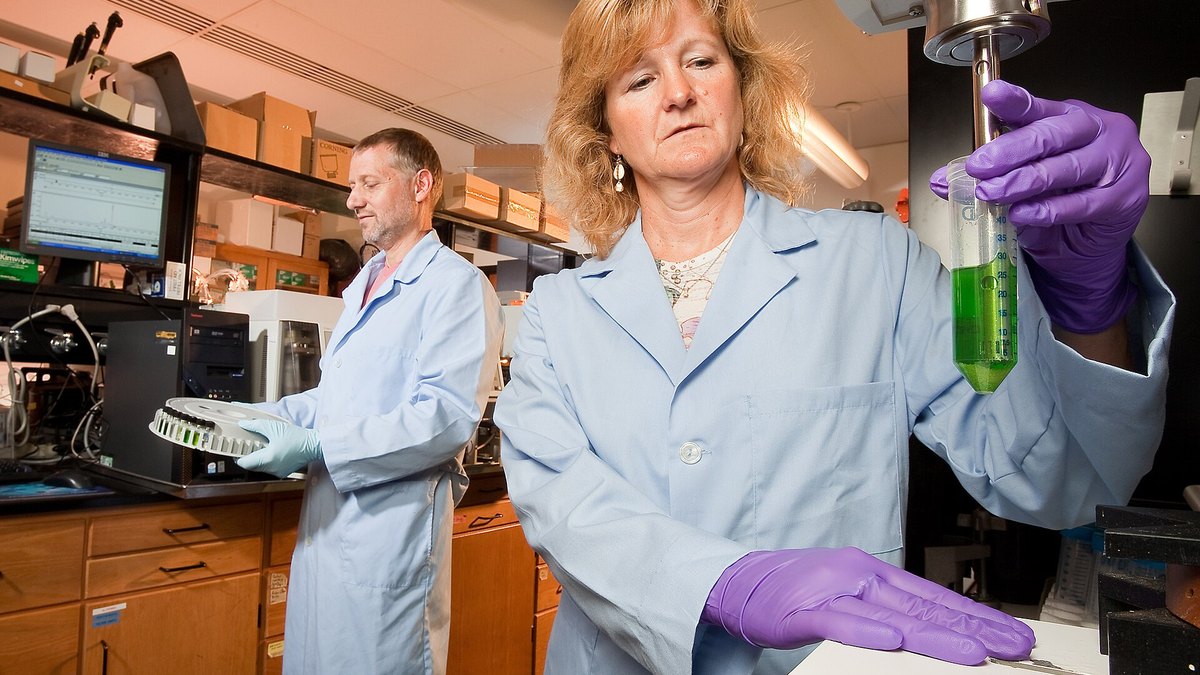
Peptide biosynthesis is the controlled building of a short amino-acid chain, one residue at a time, until it matches an intended sequence — most often by solid-phase peptide synthesis, then cleavage, purification and characterisation. Lausanne BioSynth is the working name for a Swiss-precision peptide biosynthesis and manufacturing capability under Panacea Bio Chem, led by Bogdan Dicoias. This dossier explains, in plain language, how a peptide is made, why quality systems and precision matter at every coupling, and why keeping a fragile chain intact — through drying, storage and reconstitution — is half the task. It is a scientific description of a capability and a discipline, not medical advice.
A peptide is a short chain of amino acids — the same building blocks that make up proteins, but assembled into a sequence a few dozen units long. Biosynthesis is simply the act of building that chain deliberately, so the finished molecule matches an intended sequence exactly. In the laboratory the dominant method is solid-phase peptide synthesis1, an idea that earned its inventor a Nobel Prize: the growing chain is anchored to a microscopic resin bead, and each new amino acid is added in a strict, repeating cycle — couple, wash, deprotect, wash — so residues are laid down in the right order and nothing drifts.
When the sequence is complete the chain is cleaved from the resin, and what comes off is a mixture: the target peptide alongside truncated or slightly-wrong side-products that every real synthesis produces. Turning that mixture into a single, defined substance is the work of purification — usually preparative chromatography — followed by characterisation, where mass spectrometry and analytical chromatography confirm the molecule's identity and measure its purity. Only a chain whose identity and purity are known is worth anything downstream. That chain of make → separate → prove is the whole of biosynthesis in one sentence.
Every step above is a place where small errors accumulate. A coupling that runs to 99% instead of 99.9% sounds trivial until you multiply it across forty residues, where it quietly halves your yield and multiplies the side-products purification has to remove. Temperature, reagent quality, timing and documentation each move the outcome. This is why peptide manufacturing is, at heart, a precision and quality-systems discipline as much as a chemical one: the difference between a usable batch and a wasted one is control and record-keeping.
Switzerland is a natural shorthand for exactly that. Its instrument-making and pharmaceutical lineage — the culture that produced watch-movement tolerances and a globally recognised quality reputation — is a heritage of measured, repeatable exactness. That ethos maps directly onto peptide biosynthesis, where repeatability batch-to-batch is the entire game. Lausanne BioSynth uses "Swiss precision" not as decoration but as a statement of the discipline it applies to every chain: measured, documented, and identical each time.
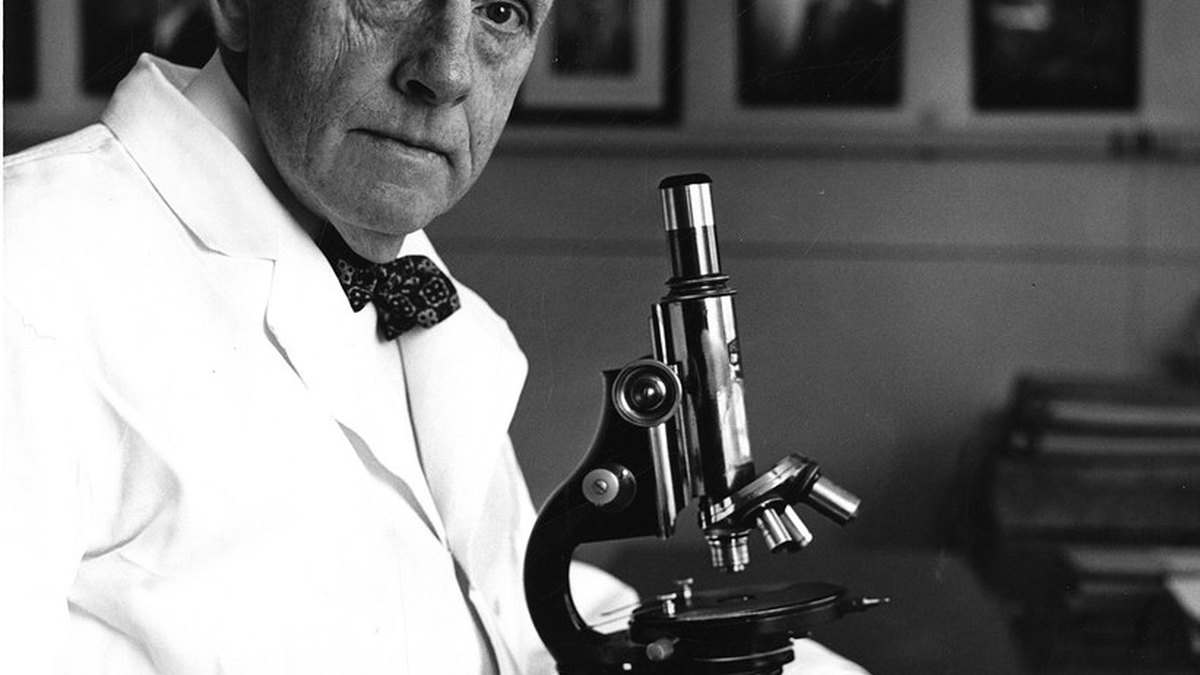
Here is the part the field is still solving, and where most fragile-peptide value is won or lost. A peptide can be synthesised to exquisite purity and still fail — because engineered chains are delicate. They can oxidise at exposed residues, aggregate into inactive clumps, or slowly unfold if they are handled, dried or stored carelessly2. A certificate of 99% purity at release means little if the molecule degrades on the shelf before it is used. So biosynthesis has a twin: preservation. The two are inseparable, and a serious capability treats them as one continuous problem — from the synthesiser to the dose.
A pure peptide that does not survive storage is a beautiful failure. Making it and keeping it are one task.
Panacea Bio Chem researches and works in peptide biosynthesis and preservation, and Lausanne BioSynth is the working name for its Swiss-precision biosynthesis capability — a capability built around a single thesis: treat making and keeping a peptide as one continuous, documented discipline. The name places the work in the tradition of Swiss precision and quality; the substance is the ability to build a therapeutic chain purely and then protect it. The exact facility, location and operating specifics are held by Panacea Bio Chem and disclosed to no page — the outline is public; the details stay behind the door.
The first half is the chemistry described above, applied with quality discipline: a therapeutic sequence is assembled residue by residue, cleaved, purified and characterised until its identity and purity are established. Where a sequence needs to be both active and durable, that is the province of the designer-peptide craft → — engineering a chain so that it holds its function while resisting the very degradation routes §3 describes. A finished, characterised peptide blend — a Peptourbillon™ → — is the object that then has to survive.
The second half is where Panacea's own toolkit does the quiet work, and it draws on the whole Lyochrysalis™ → platform rather than any single trick. The characterised peptide is filled into a dual-chamber Lyoprester® → cartridge — the chain freeze-dried into an argon-flushed, vacuum-sealed cake in the upper chamber, with a matched measure of P-EARLs™, an isotonic, polysorbate-free reconstitution liquid, held below. The cake is dried gently by TgShift™ →, which lifts the temperature at which the drying cake would collapse; its pressure curve is shaped by DiastolVAC™, a biomimetic vacuum-pulsation matched to the cake's own sublimation kinetics; residual moisture is inferred by the Cryolapse™ → pressure-collapse read; and for a dense, heavily-loaded cake an RF Tunnel — radio-frequency modulation that shrinks the middle of the cake in the first dual chamber — opens a path for clean later reconstitution. Thermal decoupling by LyoLevit™ keeps the drying even, and the entire cycle is watched, timed and coordinated by the S3Pulse™ biointegrity engine →. Finally a Vana Machine™ vacuum-conditions and plunger-locks the finished cartridge so no air gap or plunger drift can creep in during storage, and at the point of use an EZnject™ pen merges cake and diluent in a single twist into indexed, lab-grade 0.1 mL doses. What that stack aims for is a longer-lived cake, a cleaner reconstitution and preserved binding affinity — the toolkit Panacea brings to every fragile chain.
What Lausanne BioSynth treats as one continuous discipline
This section describes an active capability and research direction, stated truthfully as ongoing. No facility detail, certification or outcome is asserted; the specifics stay with Panacea Bio Chem. Nothing here is medical advice.
The link between Switzerland and precision is not marketing invention; it is metrology. The country's watch and instrument industry spent two centuries learning to hold tolerances measured in microns, and to document them — a discipline that seeped into its chemical and pharmaceutical houses, several of which grew from dye and instrument works into names known worldwide for exacting process control. What that lineage really bequeathed was not a machine but a habit: the assumption that a process is only trustworthy if it is measured, recorded and repeatable to the same result every time.
Peptide biosynthesis inherits that habit almost perfectly. A forty-residue chain is, in effect, a forty-step precision assembly where each step must be near-perfect and every step must be logged. Borrowing Switzerland's name for this work is less a flourish than an honest description of the standard the chemistry demands — and the standard Lausanne BioSynth, under Panacea Bio Chem, sets for itself. The precision came first; the peptides simply need it.
Because the discipline is about building and preserving fragile chains, its highest-impact uses cluster where those two problems bite hardest. Directions under active, ongoing work include:
These fields are offered as a map of scientific and manufacturing opportunity, not as indications or advice.
| Stage | What happens | What it controls |
|---|---|---|
| Synthesis | Solid-phase assembly, residue by residue | Correct sequence, high coupling yield |
| Cleavage | Chain released from the resin | Full-length product vs side-products |
| Purification | Preparative chromatography | A single, defined substance |
| Characterisation | Mass spec + analytical chromatography | Known identity and purity |
| Preservation | Freeze-drying via the Lyochrysalis stack | The chain survives storage intact |
| Delivery | Lyoprester cartridge + P-EARLs + EZnject | Clean reconstitution, indexed dosing |
What is peptide biosynthesis, in plain terms?
The controlled building of a peptide — a
short amino-acid chain — one residue at a time until it matches an intended sequence, most often by
solid-phase peptide synthesis. The chain is then cleaved from its resin, purified of
side-products, and characterised so its identity and purity are known.
Why is Switzerland associated with precision manufacturing?
Switzerland has a long
instrument-making and pharmaceutical lineage in which exactness, documentation and quality systems are
cultural. That heritage of measured, repeatable precision maps directly onto peptide biosynthesis,
where every coupling and analysis must be controlled and recorded. Lausanne BioSynth uses
"Swiss precision" as shorthand for that discipline.
What is Lausanne BioSynth?
The working name for a Swiss-precision peptide biosynthesis
and manufacturing capability under Panacea Bio Chem, led by Bogdan Dicoias. It frames
building a peptide purely and then keeping it intact through drying, storage and reconstitution with
the Panacea preservation stack. Exact facility and operating details are held by Panacea Bio Chem.
Why does keeping a peptide intact matter as much as making it?
A peptide can be
synthesised to high purity and still oxidise, aggregate or unfold if dried or stored carelessly, so
preservation is the twin of synthesis. Panacea pairs the two — TgShift, DiastolVAC, Cryolapse and the
S3Pulse engine — so the chain that leaves the synthesiser is the chain that reaches the dose. Nothing
here is medical advice.
Recent developments in the field — refreshed 2026-09-10 by Panacea Bio Chem.
The Panacea Technology Universe
Proprietary Panacea Bio Chem Ltd technologies, invented by Bogdan Dicoias — what each one does, and why it leads its class.
 Lyoprester®The only dual-chamber cartridge that is autoreconstitution-enabled, vacuum-sealed and argon-fillback.lyoprester.com ↗
 P-EARLs™Panacea-Engineered Aseptic Reconstitution Liquid(s) — each tuned to the peptide it wakes.p-earls.com ↗
 Peptourbillon™The layered peptide formulation architecture — single- or multi-layer, never a blend.peptourbillon.com ↗
 RF Tunnel™The RF-formed central channel through the cake.rftunnel.com ↗
 TgShift™Raises the cake’s glass-transition temperature with RF — instead of chilling below it.tgshift.com ↗
 Cryolapse™Cryogenic pressure collapse — and the machine that pushes plungers and crimps.cryolapse.com ↗
 LyoLevit™The cake levitates and spins in high orbit — driven by ultrasound and RF.lyolevit.com ↗
 Lyochrysalis™The integrated chamber housing the whole drying stack.lyochrysalis.com ↗
 S3Pulse™The control brain for every piece of Panacea hardware.s3pulse.com ↗
 Liquiprester™The single-liquid cartridge engineered so multiple peptide APIs coexist in one shared vehicle.liquiprester.com ↗
 Syntheseract™Continuous-flow peptide synthesis in a special, very fast and economical way.syntheseract.com ↗
 CFSPPS™Continuous-flow solid-phase peptide synthesis, written as its own category.cfspps.com ↗
 OxyDeplete™Degassing plus no-headspace doctrine — the oxygen-starved seal.oxydeplete.com ↗
 ArgonLock™The final inert-atmosphere lock under argon.argonlock.com ↗
 RedoxVault™Separation, not merely suppression — redox isolation in lipid micro-reservoirs.redoxvault.com ↗
 PleniDose™The shared filling gantry — one machine filling both the dual-chamber Lyoprester and the liquid Liquiprester.plenidose.com ↗
 IncreSure™The dose-metrology layer — verified API per pen increment.incresure.com ↗
 ElimiVoid™Front-void elimination without touching the metered dose.elimivoid.com ↗
 Cryoviscous™The characterised cold, high-viscosity, low-mobility conditioning state.cryoviscous.com ↗
 Vana Machine™Vacuum Assisted Needle Accessory — vacuum conditioning and plunger-locking for the cartridge.
 EZnject™The disposable auto-injector pen built around the Lyoprester.panaceaeznject.com ↗
 Dicoias ΨThe computed-chemistry advisory — every substance reduced to a vector across physical, electronic and formulation space.dcppsi.com ↗
 SealoPrester™Aseptic Cartridge Closure System — Seal o’ Precision + Sterility.sealoprester.com ↗
 Peptidic LiquidThe peptide formulation in solution — the active plus its buffers, cryoprotectants, lyoprotectants and scaffolders.peptidicliquid.com ↗
 DiastolVAC™Biomimetic diastolic vacuum control — the pneumatic circulatory system of the machine: pumps, valves and sensors as one ensemble.diastolvac.com ↗
The publications indexed in PubMed in the last 30 days for peptide synthesis in Switzerland already appear in Trending above — the next most recent in the field, refreshed weekly.